Stand out
Turn support into a visible MyID benefit with sponsor-approved branding.
 Patient ProgramsTalk to us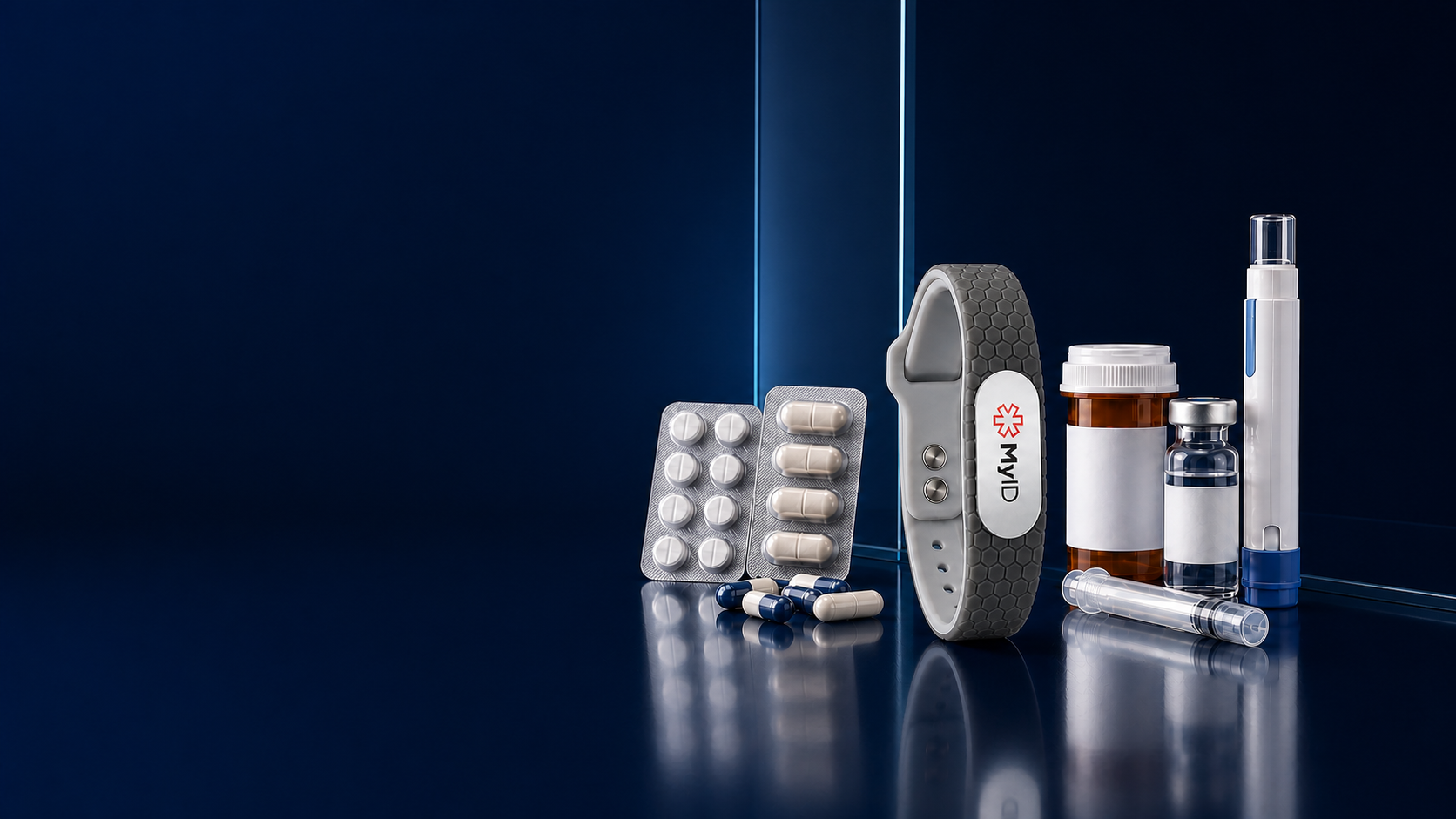
A branded patient-program wearable
Your program buys a MyID wearable with sponsor-approved branding, approved quick-start and activation materials, and a MyID Essentials membership included for every participant for life—with no recurring participant fee.
The sponsor business case
Practical for patients. Visible for the sponsor.
MyID makes support visible after enrollment. The sponsor gains a distinctive program benefit while the participant keeps control of their profile.
Turn support into a visible MyID benefit with sponsor-approved branding.
Include a MyID Essentials membership for every participant for life, with no recurring participant fee.
Use the kit at enrollment, onboarding, or another approved program moment.
Start with the standard bundle. Add optional services only when needed.
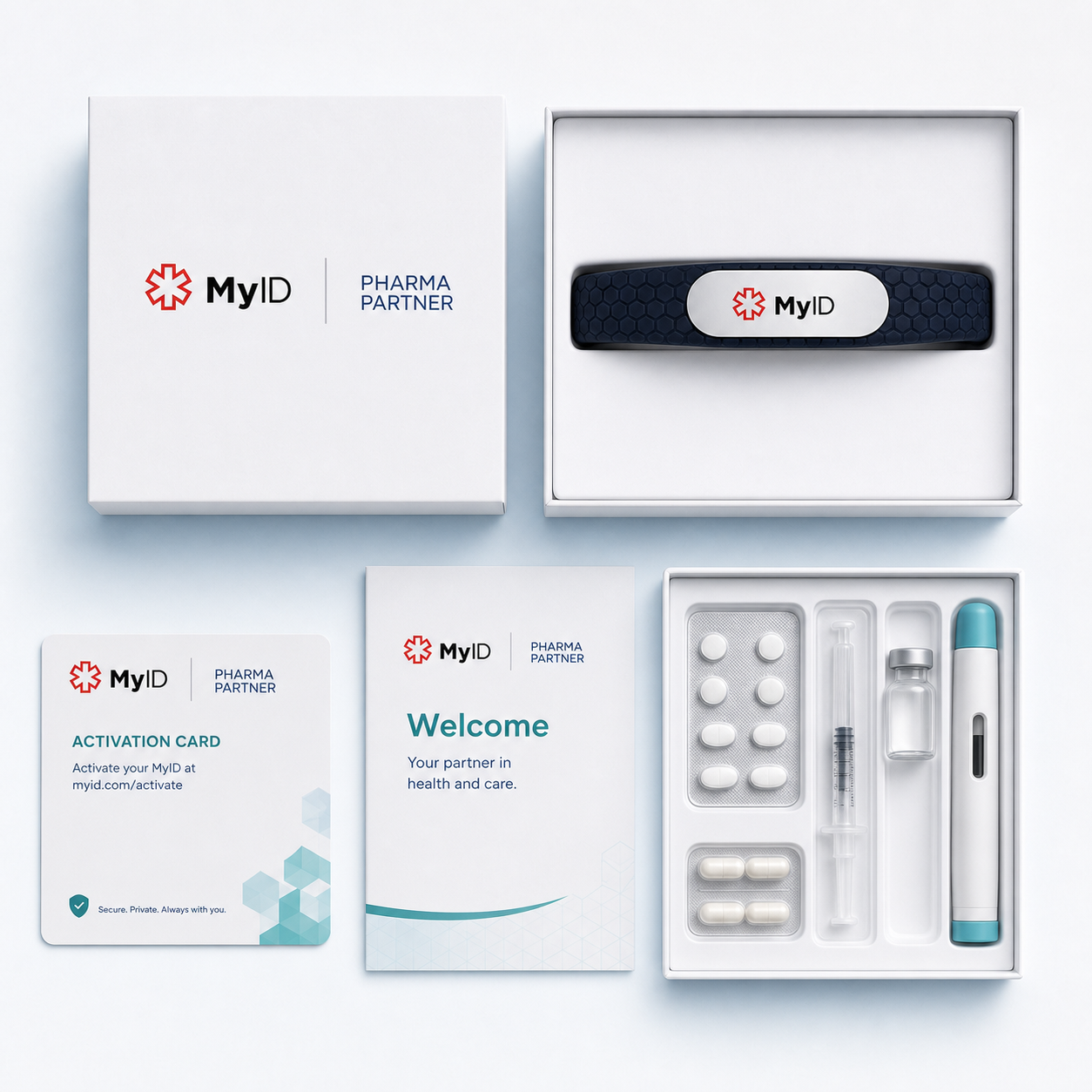
The branded program kit
Fulfillment upgrades, MyID+, measurement, reporting, and integrations are optional.
The offer
One standard product-and-access bundle. Everything else is optional.
Standard program
Optional services
Participants control their MyID profile. Sponsor access to participant-entered medical information is not included.

The support gap
Patients experience more than the medication. MyID gives sponsors a practical way to make approved support visible, wearable, and useful in everyday life.
What the program looks like
The participant receives the kit, activates the profile, wears the band, and scans it when needed.
The participant receives an approved MyID wearable kit at the program moment you define.
They connect the wearable to their MyID account and add only the profile information they choose.
The passive, waterproof wearable travels with them through appointments, work, home, and everyday life.
A smartphone scan opens the patient-controlled emergency profile in a browser. The scanner does not need the MyID app or a login.
Sample ProfileParticipant controlledMyID Essentials included for life
The sponsor’s program purchase includes MyID Essentials for every participant for life.
The participant does not pay a recurring Essentials fee.Eligibility, field limits, acceptable use, and other MyID Essentials terms are finalized in the program agreement.A QR scan opens the participant-selected emergency profile in a smartphone browser—no scanner app or login required.
The participant can include their name, photo, and the emergency contacts they want available.
Blood type and essential medical conditions can travel with the participant.
Important allergy details can be kept accessible in the emergency profile.
The participant can include essential information about current medications and supplements.
They can update their profile and connect multiple MyID products to the same profile.
Optional upgrade
Scan and location alerts, document storage, secure sharing, medication reminders, Apple Health/EHR sync, expanded categories, and family management remain optional Plus services. They are not included in the Essentials membership unless separately sponsored.
“The online portal is easy to use. The QR codes scan and link well.”
Jen · Verified MyID customer
A straightforward launch
Start with the product and participant experience. Add complexity only when it is justified.
MyID provides the agreed standard program. Any fulfillment variant, measurement plan, report, integration, or custom workflow is documented and priced separately before work begins.
Choose the participant group, distribution moment, volume, and program objective.
Approve the wearable color, sponsor name or program artwork, quick-start materials, and instructions.
MyID produces the agreed kits for distribution through the approved channel.
Scale the standard program or separately scope optional services.
Value across the organization
A visible program benefit that extends approved support beyond the prescription.
A practical wearable and MyID Essentials included for life with no recurring participant fee.
Defined kit components, production inputs, and distribution.
One standard bundle, with optional services priced separately.
Straight answers
Program configuration, claims, data flows, fulfillment, and partner branding are finalized through discovery and the appropriate review teams.
No. The wearable is a passive medical ID. It does not measure, diagnose, monitor, or transmit physiological data. It links a smartphone scanner to a patient-controlled MyID profile.
No. MyID is designed as a physical, patient-controlled layer that can complement existing support services, approved education, and manufacturer-owned destinations.
The manufacturer does not receive access to participant-entered medical information. Surveys, reporting, analytics, or integrations are optional and require a separate approved scope.
No program can guarantee revenue. MyID can help the sponsor stand out with a useful support benefit. Any commercial evaluation requires a separate measurement plan and appropriate sponsor data.
Each participant receives a MyID wearable with sponsor-approved branding, approved quick-start and activation materials, and a MyID Essentials membership included by the sponsor for life. The participant does not pay a recurring Essentials fee.
Yes. The wearable can carry an approved sponsor name or program artwork alongside the agreed MyID product identification. Final artwork, colors, and materials are confirmed in the program proposal.
Choose a participant group, distribution moment, volume, branding, and delivery plan. MyID then produces the approved kits for the agreed channel.
Direct-to-participant fulfillment, custom kitting, MyID+, surveys, reporting, analytics, integrations, and custom workflows are separately scoped and priced.
Start the partnership conversation
Tell us about the therapy, program, timing, anticipated scale, branding, and fulfillment needs. We’ll outline the standard MyID wearable program and identify any optional services separately.
Ready to schedule a conversation?Choose video or phone call ↓For business inquiries only. Do not submit patient information, health records, or protected health information through this form.Schedule with Brad
Google will send the calendar confirmation directly.
Please do not include patient information, health records, or protected health information in the booking form.
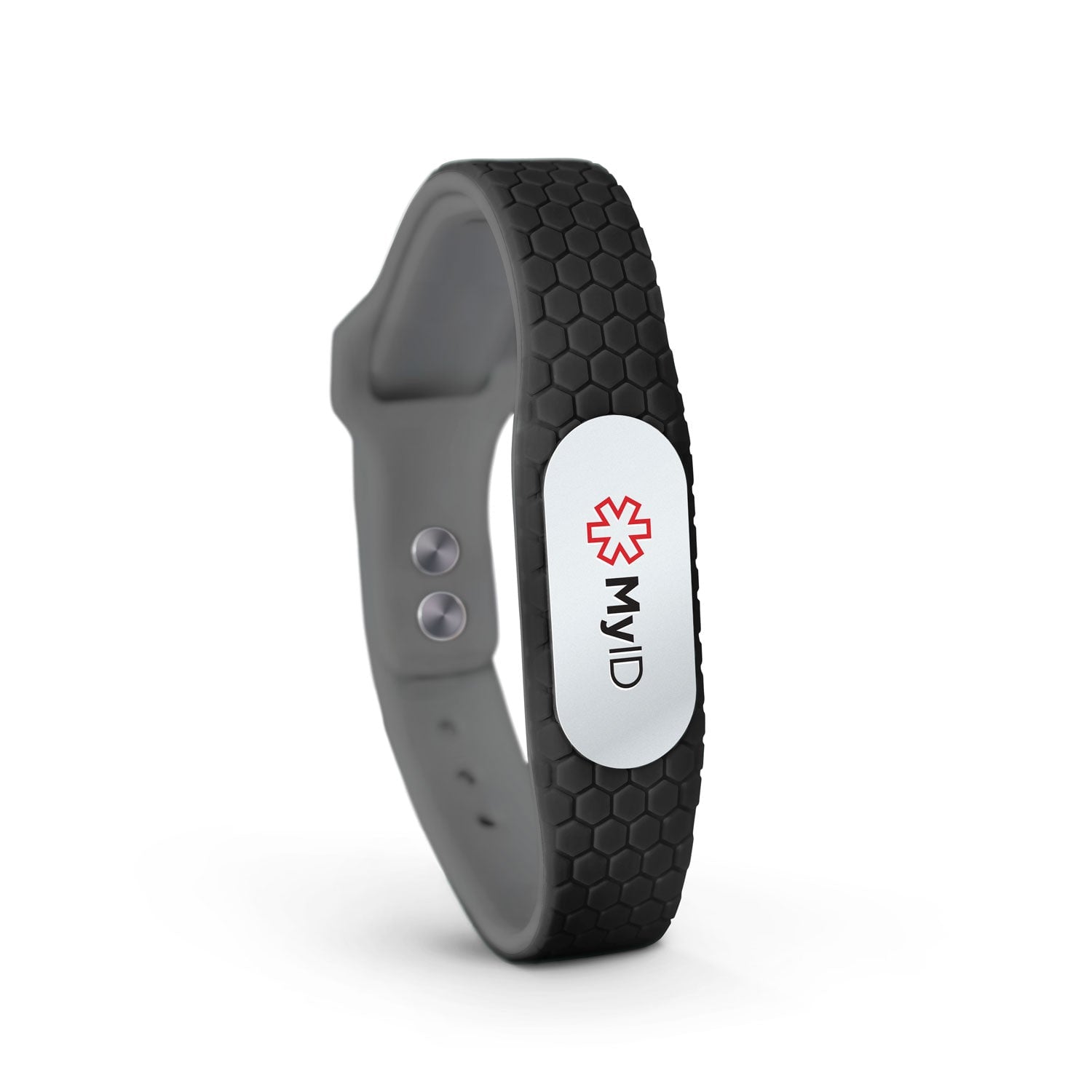
Review the band and welcome materials with your team.
For qualified U.S. organizations
Enter your information and we’ll follow up with qualified teams for a U.S. business shipping address.
One complimentary sample kit per qualified organization. Subject to eligibility and availability. No purchase required. Do not submit patient or health information.